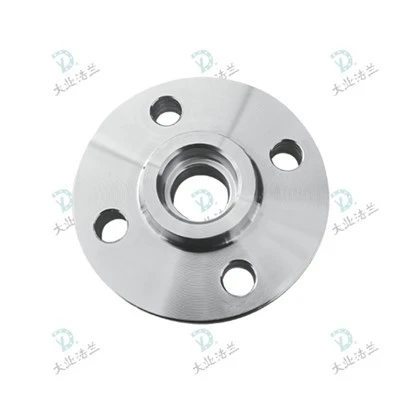


1. Achieving a reliable sealing connection: This is the most fundamental function of flanges. By placing a gasket between two mating flanges and tightening it under the preload of the bolts, an effective seal is formed at the connection interface, preventing leakage of media (such as liquids, gases, slurries, etc.) within the pipeline or equipment. This is crucial for ensuring production safety, protecting the environment, and maintaining the normal operation of the system.
2. Providing convenient disassembly and maintenance access: Unlike specialized connection methods such as welding, flange connections are detachable. When cleaning, inspection, component replacement, or repair of the piping system is required, simply loosening the connecting bolts allows the flange connection to be separated, greatly simplifying the maintenance process, shortening downtime, and reducing the difficulty and cost of long-term maintenance.
3. Simplifying the installation of complex systems: In large or complex piping networks, installing the entire pipeline as a single unit is often impractical. Flanges allow for the prefabrication of pipes into appropriately sized sections, or for the equipment and flanges to be pre-assembled in the factory, requiring only flange connection upon arrival at the site. This modular installation method improves construction efficiency and makes transportation and hoisting more convenient.
4. Adapting to System Changes and Expansions: Adjustments to production processes or expansions in production scale may require modifications or extensions to existing piping systems. The presence of flange connections makes adding or removing equipment, changing pipeline routes, or connecting new branch pipes relatively easy, ensuring system flexibility.
5. Connecting Components of Different Materials and Specifications: Equipment, valves, pumps, and other pipe sections in a piping system may be made of different materials or have different end connection types. As a universal interface standard, flanges can effectively connect these different components, as long as they adhere to the same flange standard.
6. Providing Vibration and Stress Compensation: Under conditions of slight vibration, thermal expansion and contraction, or foundation settlement, rigid connections may be damaged due to stress concentration. Selecting appropriate flange types (such as loose flanges) and flexible gaskets can absorb these displacements and vibrations to a certain extent, protecting the system from damage.