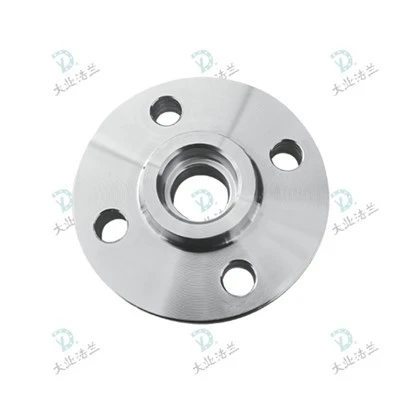


My country's current flange standards comprise two systems: the PN series, originating from Europe, which uses nominal pressure ratings ranging from PN2.5 to PN160 (nine levels); and the Class series, originating from the Americas, which also uses nominal pressure ratings ranging from Class 150 to Class 2500 (six levels). Below is a comparison table of flange nominal pressure ratings:
Pressure ratings themselves do not imply a hierarchy of "high" or "low"; they are simply standardized methods of designation. When interchanging flanges, one must consider the conversion relationships between different standards-such as the conversion between LB and MPa, where approximately MPa = 0.007 × LB. However, please note that LB and PN, as pressure ratings, represent more than just a simple unit conversion; each carries its own unique meaning and set of standards.
Next, we examine the differences in nominal pressure ratings between the HG/T20592-2009 and HG/T20592-97 flange standards. Although similar, these standards differ in how they define nominal pressure. In the HG/T20592-2009 standard, the rating is designated as PN16, whereas in the HG/T20592-97 standard, the corresponding rating is PN1.6. In reality, both standards represent the same pressure level-commonly referred to as "16-kilogram pressure."
Furthermore, the units used for nominal pressure differ between the two standards: the 2009 version uses "bar," while the 1997 version uses "MPa." Notably, 16 bar is exactly equal to 1.6 MPa, providing a basis for conversion between the two standards.